Health Info NICOTINE USE WARNINGFDA Warns of Health Risks Posed by E-Cigarettes Get Consumer Updates by E-mail  Download PDF (424 K) Download PDF (424 K)
The Food and Drug Administration (FDA) has joined other health experts to warn consumers about potential health risks associated with electronic cigarettes. Also known as "e-cigarettes," electronic cigarettes are battery-operated devices designed to look like and to be used in the same manner as conventional cigarettes. Sold online and in many shopping malls, the devices generally contain cartridges filled with nicotine, flavor, and other chemicals. They turn nicotine, which is highly addictive, and other chemicals into a vapor that is inhaled by the user. “The FDA is concerned about the safety of these products and how they are marketed to the public,” says Margaret A. Hamburg, M.D., commissioner of food and drugs. The agency is concerned that - e-cigarettes can increase nicotine addiction among young people and may lead kids to try other tobacco products, including conventional cigarettes, which are known to cause disease and lead to premature death
- the products may contain ingredients that are known to be toxic to humans
- because clinical studies about the safety and efficacy of these products for their intended use have not been submitted to FDA, consumers currently have no way of knowing 1) whether e-cigarettes are safe for their intended use, or 2) about what types or concentrations of potentially harmful chemicals or what dose of nicotine they are inhaling when they use these products.
The potential health risks posed by the use of e-cigarettes were addressed in a July 22, 2009, phone conference between Joshua M. Sharfstein, M.D., principal deputy commissioner of food and drugs; Jonathan Winickoff, M.D., chair of the American Academy of Pediatrics Tobacco Consortium; Jonathan Samet, M.D., director of the University of Southern California's Institute for Global Health; and Matthew T. McKenna, M.D., director of the Office on Smoking and Health at the national Centers for Disease Control and Prevention. Conference participants stressed the importance of parents being aware of the health and marketing concerns associated with e-cigarettes. It was stated that parents may want to tell their children and teenagers that these products are not safe to use. Of particular concern to parents is that e-cigarettes are sold without any legal age restrictions, and are available in different flavors (such as chocolate, strawberry and mint) which may appeal to young people. In addition, the devices do not contain any health warnings comparable to FDA-approved nicotine replacement products or conventional cigarettes. During the phone conference, which was shared with the news media, FDA announced findings from a laboratory analysis that indicates that electronic cigarettes expose users to harmful chemical ingredients. FDA’s Division of Pharmaceutical Analysis—part of the agency's Center for Drug Evaluation and Research—analyzed the ingredients in a small sample of cartridges from two leading brands of e-cigarette samples. One sample was found to contain diethylene glycol, a toxic chemical used in antifreeze. Several other samples were found to contain carcinogens, including nitrosamines. back to top Agency ActionsFDA has been examining and detaining shipments of e-cigarettes at the border and has found that the products it has examined thus far meet the definition of a combination drug device product under the Federal Food, Drug, and Cosmetic Act. The agency has been challenged regarding its jurisdiction over certain e-cigarettes in a case currently pending in federal district court. FDA is planning additional activities to address its concerns about electronic cigarettes. Meanwhile, health care professionals and consumers may report serious adverse events or product quality problems with the use of e-cigarettes to FDA through the MedWatch program, either online or by phone at 1-800-FDA-1088. This article appears on FDA’s Consumer Updates page, which features the latest on all FDA-regulated products. Updated: September 17, 2013
A Regular Cigarette
Various scientific researches has shown that cigarette smoke contains approximately 4,800 chemical substances & compounds, many of which are harmful to the human body, with 25 diseases directly related to smoking. The carbon monoxide, polycyclic aromatic hydrocarbon and nitrosamine in cigarette smoke are considered the most dangerous carcinogenic substances.
Second-hand or passive smoking has allegedly caused serious health issues for men, women and children. Many countries have already or will soon be banning smoking in public places. A ban came into force in the UK on 1st July 2007.
The Electronic Cigarette is the result of research and development of a non-flammable cigarette substitute. You can use the Electronic Cigarette for many purposes and you can enjoy your pleasure in a healthier manner.
It has been found that there are approximately 4,800 chemicals in regular cigarettes and in the smoke they produce. Out of those 4,800 chemicals, 43 have been specifically identified to cause cancer.
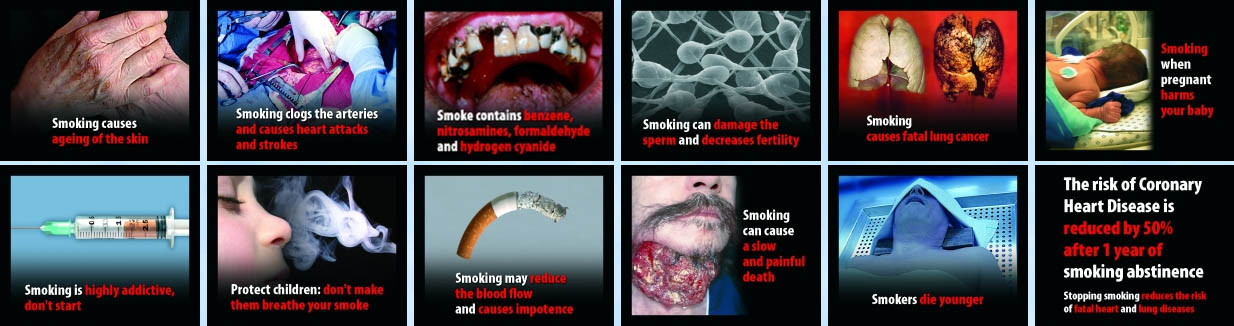
Below is a list of 20 ingredients (out of 4,800!) of regular cigarettes. Each of these is described alongside:-
Acetone: One of the active ingredients in nail polish remover.
Ammonia: A caustic agent used in fertilisers and household cleaners. Is added to enhance the flavor of a cigarette, but also helps the smoker to absorb more nicotine thereby enhancing addiction.
Arsenic: Makes your lips burn and is responsible for giving you bad breath.
Benzopyrene: One of the most potent cancer-causing chemicals in the world. Found in coal tar and cigarette smoke.
Benzene: An industrial chemical and a constituent of gasoline. It is a group 1 carcinogen and is responsible for causing leukemia and aplitic anemia.
Butane: A key component of gasoline, it’s highly flammable.
Carbon Monoxide: A colorless, odorless gas, which starves the body of existing oxygen.
Cadmium: Used in batteries and oil paint. It is a group 1 carcinogen. It damages the liver, kidneys, and brain and remains in the body for years (>10 years). Is also excreted in the breast milk of nursing mothers.
Formaldehyde: Used in embalming (preserving tissue). Causes cancer and damages the lung, skin, and digestive tract.
Hydrogen Cyanide: A colorless poisonous gas. Short-term exposure causes headaches, dizziness, nausea and vomiting.
Lead: Of the heavy metal group. Stunts growth and damages the brain, kidneys and nervous system. Lead is more easily absorbed in the growing bodies so children are particularly vulnerable. Exposure in children can result in development delays, lower IQ levels, shortened attention spans and increased behavioral problems
Methoprene: An insecticide used to kill fleas on your pets.
Mercury: A heavy metal, affects the central nervous system. Exposure causes tremors, memory loss and kidney disease.
Nickel: A heavy metal, affects the central nervous system. Exposure causes increased susceptibility to respiratory infections.
Nitric oxide: Produces short-term effects on airway activity. High concentrations can lead to acute lung dysfunction.
Phenol: Used in disinfectants and plastic. Exposure causes skin, eye, and mucus membrane irritation.
Polonium: A cancer causing radioactive element.
Styrene: Found in insulation material. Causes headaches, fatigue, weakness, and depression.
Toluene: Embalmers glue, which is a central nervous system depressant. Exposure causes ataxia, tremors, cerebral atrophy, nystagmus, impaired speech, hearing and vision, headaches, dizziness and difficulty sleeping.
Turpentine: A toxic chemical used in paint stripper
The intelliCIG
Here is a list of the main ingredients of an intelliCIG cartridge.
Main ingredients (>95%) Vegetable Glycerol, Nicotine, Aqueous, Deionized-water, Other (<3%)
It should be noted that any long term effects of V/glycol being inhaled (and for that matter the other few ingredients in an intelliCIG) are unanswered at this time. What is known and certain is that regular cigarettes are certainly known without doubt to stand a good chance of causing one of many diseases many of which can be fatal.
|